2018 Penny Value: What Is Common and What Is Worth More
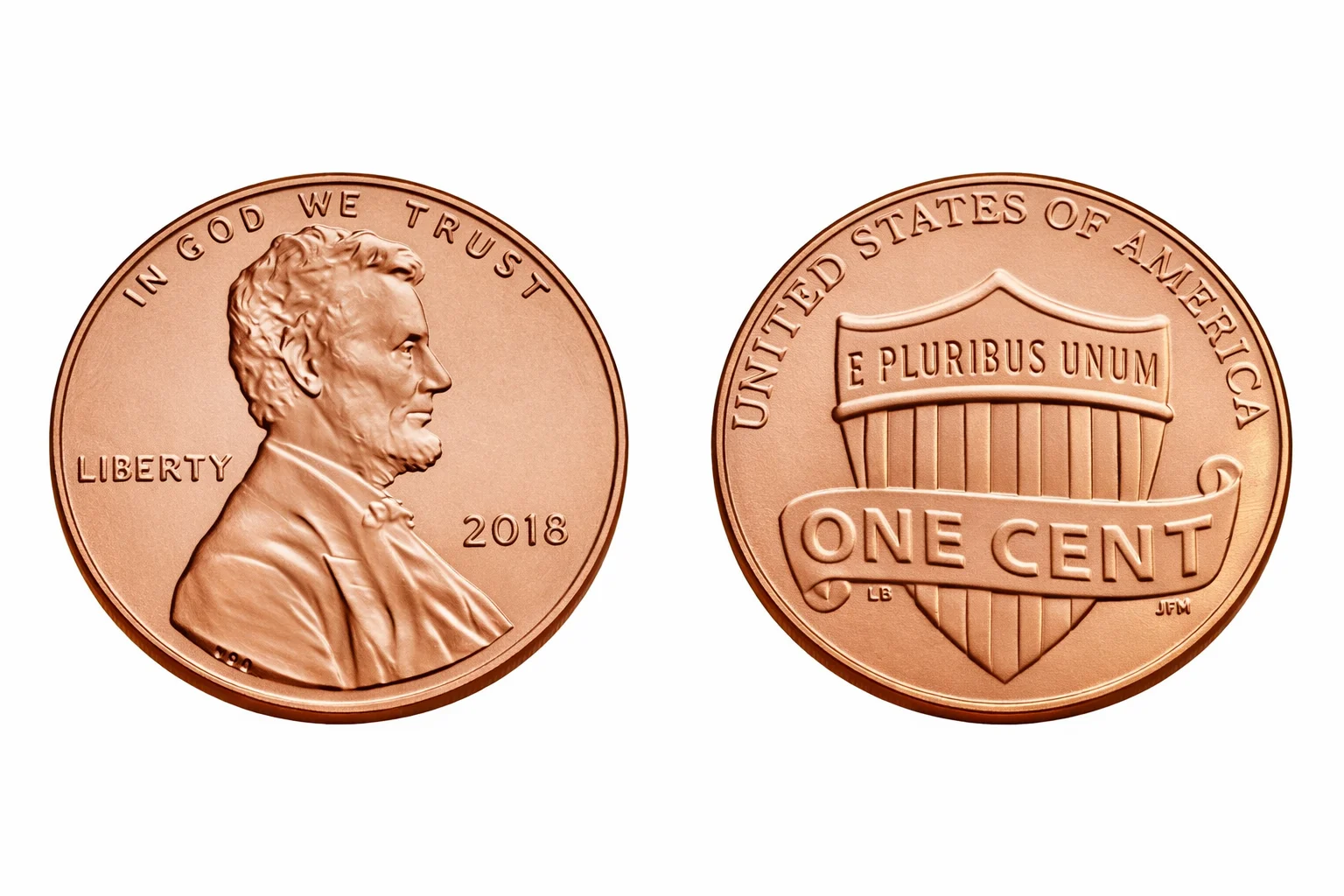
The 2018 penny value starts from a simple point. Most coins from this year are common. The date is not a key date. Mintages were very large, and ordinary circulation pieces are easy to find. The coins that sell for more are usually top-grade business strikes, proof issues, reverse proofs, or confirmed varieties.
That makes 2018 a practical modern date for collectors. It is not scarce by year. It becomes interesting when the coin is better than average, comes from a special issue, or shows a real mint-made variety.
Why Most 2018 Pennies Are Common
Philadelphia struck 4,066,800,000 cents in 2018.
Denver struck 3,736,400,000.
Those totals keep the year in the common category. PCGS notes that 2018-P pieces are easy to find and that real scarcity begins only around MS68 or higher.
2018-D coins were made in strong quality overall, and even MS69 pieces exist, while MS70 is very difficult. That tells you where the premium begins: very late.
Most 2018 pennies stay common because:
- Mintages are huge
- Survival is high
- Many clean examples were saved from the start
- Collector demand concentrates on top grades and special issues
Interesting Fact
The year has one detail that collectors remember. According to the U.S. Mint, in fiscal year 2018, the production and distribution cost of one cent was about 2.06 cents. The cost was higher than face value. That does not make the coin rare. It does make the year more notable than a routine modern cent date.
What Types of 2018 Pennies Exist
The 2018 cent should be split into four main groups before talking about price. The first two are the normal circulation strikes from Philadelphia and Denver. The third is the regular San Francisco proof. The fourth is the San Francisco reverse proof from the 50th Anniversary Reverse Proof Set. These are different products with different value patterns.
| Version | Type | Mintage | Approximate Value Range |
| 2018-P | Business strike | 4,066,800,000 | $0.01–$0.36+ |
| 2018-D | Business strike | 3,736,400,000 | $0.01–$0.36+ |
| 2018-S | Proof | 901,077 | $6.26+ |
| 2018-S Reverse Proof | Special issue | 199,116 | $23–$38+ |
The table shows the basic split. Ordinary P and D coins are common. The proof already sits above face value. The reverse proof stands apart more clearly because the mintage is much lower, and the market treats it as a more distinct collector issue.
The Common Coins: 2018-P and 2018-D
The regular 2018-P and 2018-D cents are modern business strikes made for circulation. In worn condition, they are face-value coins. In ordinary Mint State, they remain inexpensive: about $0.36 or more for the 2018-P.
That does not mean every nice coin is the same. For modern cents, the market rewards clean red surfaces, fewer marks, and very high certified grades. PCGS says 2018-P becomes scarce only at MS68 or higher.
PCGS auction record is $1,800 for a 2018-P in MS68RD. For the 2018-D, the top end is even more dramatic: PCGS lists an auction record of $5,996 for MS69RD. These are not normal prices for raw coins. They belong to a thin top-grade market.
A 2018 circulation cent becomes more valuable when it has:
- Full red color;
- Clean surfaces;
- A sharp strike;
- Very few marks;
- A high certified grade.
Proof And Reverse Proof Coins
The 2018-S proof is a regular collector issue. The most proof examples were struck with Deep Cameo surfaces, and they mostly range from PR68 to PR70 Deep Cameo. The standard proof is about $6.26 or more. That makes it worth more than face value, but still affordable for most collectors.
The reverse proof is the more interesting special issue of the year. USA Coin Book lists a mintage of 199,116 and an estimated value of about $38 or more. PCGS auction records show reverse proof sales around $23.37 at lower certified levels and an auction record near $290 for a PR70 example tied to the 50th Anniversary Set. That is a much stronger profile than a standard circulation cent.
| Type | Surface | Approximate Value Range | What Drives the Premium |
| Business strike | Standard finish | $0.01–$0.36+ | High Mint State grade |
| Proof | Mirror-like finish | $6.26–$127.50 | Preservation and proof grade |
| Reverse proof | Reverse contrast finish | $23–$290 | Special issue status and top grade |
This is the cleanest way to read the year. The ordinary circulation coins stay cheap for a long time. The proof moves into a separate collector bracket. The reverse proof separates further because of the format and lower mintage.
What Is Cheap and What Is Worth More
The value structure is simple once the coin types are separated. Most 2018-P and 2018-D coins are one-cent pieces in circulation. Better red uncirculated examples are still modest. The larger premiums begin with very high certified grades, standard proofs, reverse proofs, and listed varieties.
| Version / Level | Approximate Value Range |
| 2018-P / 2018-D circulated | $0.01 |
| 2018-P / 2018-D common uncirculated | $0.36+ |
| 2018-P high-grade certified | $100+ to $1,800 |
| 2018-D high-grade certified | $150+ to $5,996 |
| 2018-S proof | $6.26+ to about $127.50 |
| 2018-S reverse proof | about $23 to $290 |
The large numbers at the top do not describe normal coins. They describe upper-end certified pieces. For most collectors, the useful split is easier: circulation cents are common, proofs are affordable collector coins, reverse proofs are more distinctive, and top-grade business strikes belong to a narrow premium segment.
What Affects the 2018 Penny Value Most
The year alone does not create a premium. The market pays for quality and format.
The main value drivers are:
- Grade
- Original red surfaces
- Proof or reverse proof status
- Certification
- Listed varieties
- Demand for top-pop modern cents
That explains why two 2018 cents can look similar at first glance and still sell in different price brackets. One may be common pocket change. The other may be a high-end red coin, a proof, or a reverse proof with a much stronger collector market.
Errors And Varieties Worth Checking
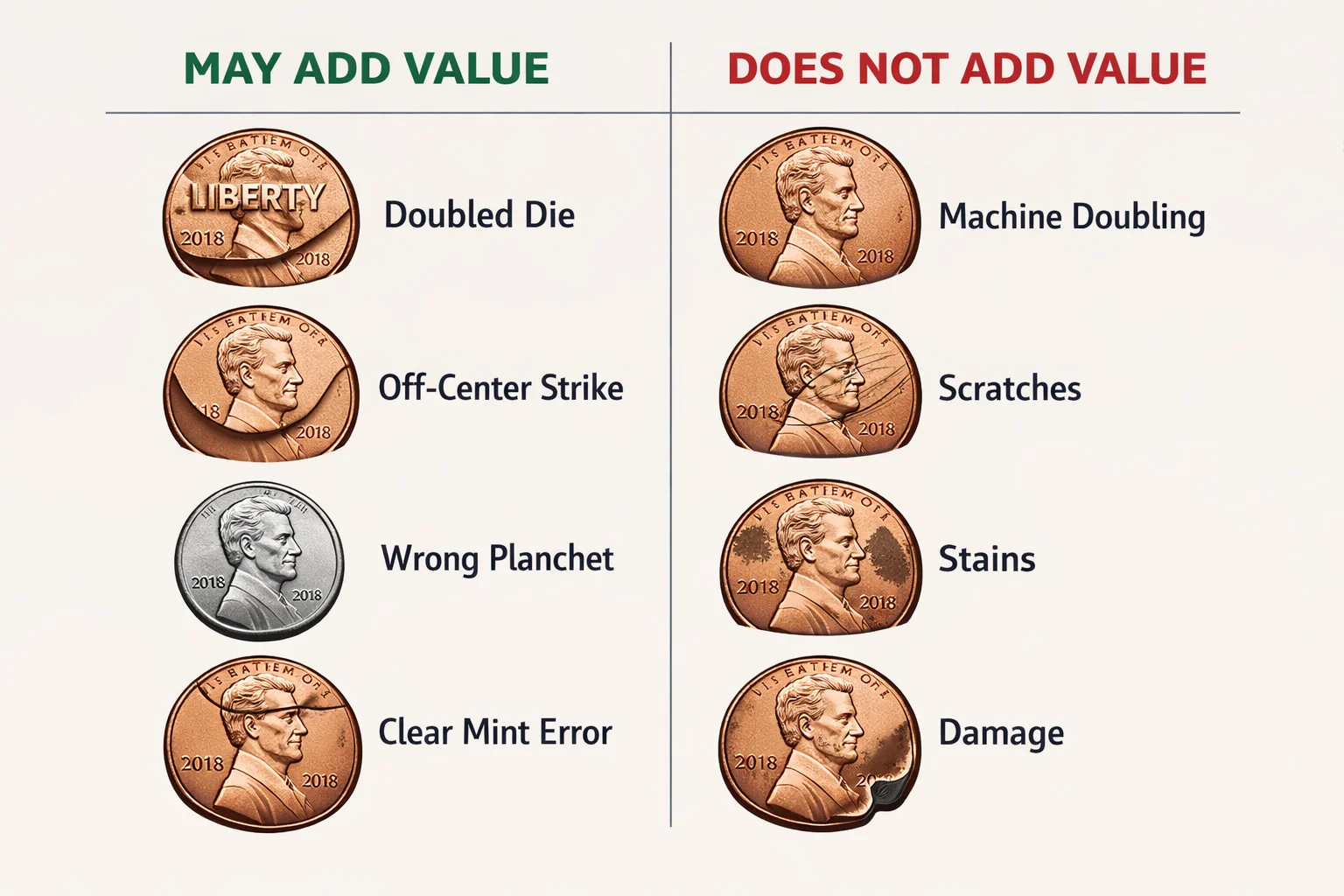
The most meaningful area for 2018 varieties is the doubled die group. The 2018 doubled die cent was found in late 2018 and described the doubling as extra thickness on the numerals of the date and elsewhere. Variety Vista now lists both 2018 1c DDOs and 2018-D 1c DDO-001, which confirms that collectors have recognized doubled die material for both mints.
What may add value:
- Listed doubled die varieties
- Strong off-center strikes
- Wrong planchet errors
- Other clear mint errors
What usually does not add value:
- Machine doubling
- Scratches
- Stains
- Post-mint damage
- Normal circulation abuse
How Collectors Usually Approach the 2018 Penny
Collectors treat this year in different ways. Some ignore it because it is modern. Some build complete Lincoln Shield sets and want the best red business strikes. Some focus on proofs and reverse proofs. Others look for doubled dies and other listed varieties. That is normal for a date like 2018. The year is common, but it still gives several collecting angles.
Modern cent collectors often use auction records, set comparisons, and a free coin scanner app to sort business strikes from special issues, compare finishes, and keep similar 2018 cents organized inside a larger Lincoln group. That approach works better than judging every coin by the date alone.
Coin ID Scanner is useful in that workflow because it combines coin cards, collection storage, filters, and value guidance in one place, so modern cents do not end up mixed without context. The app’s official materials also emphasize a large database of more than 187,000 world coins and sorting engines and smart filters, which fit this kind of set-building work.
FAQs
Is the 2018 Penny Rare?
No. Not as a date. It is a common modern issue. The scarcity appears in top grades, proofs, reverse proofs, and listed varieties.
Is a 2018 Penny Worth Keeping?
Most are common. Better pieces are worth keeping if they are high grade, proof, reverse proof, or a confirmed variety.
What Is Special About the 2018-S Reverse Proof?
It is a more distinct collector issue with a lower mintage of 199,116 and a stronger market than the normal 2018 business strikes.
Does the 2.06-Cent Production Cost Add Value?
No. It is an interesting fact about the year. It does not make the coin rare. To scan coins for value and get quick answers, try Coin ID Scanner.
Conclusion
The 2018 penny is a common modern cent in most forms. That is the honest reading of the year. Philadelphia and Denver business strikes usually stay cheap. The better values appear later, with top certified grades, proof issues, reverse proofs, and real varieties.
That makes 2018 a useful date for collectors: it is easy to find, easy to sort into levels. It also shows a clear lesson: modern coins do not become valuable because they are modern or because they are old enough to save. They become valuable when grade, finish, or variety moves them above the common level.